Common Reasons for Thermostat Repair

Common Reasons for Thermostat Repair

  • Cooling
  • Heating
  • Indoor Air Quality
At North Shore Home Energy, our expert thermostat repair services can solve any thermostat problem, keeping your home comfortable!

Thermostats and Maintaining Home Comfort

Thermostats serve as the control center for your heating, ventilation, and air conditioning (HVAC) system, enabling you to set your desired temperature and manage energy usage effectively. A well-functioning thermostat ensures that your HVAC system operates efficiently, providing consistent comfort throughout your home.  However, like any device, they can experience issues that require repair. Understanding the common reasons for thermostat repair can help you identify and resolve problems quickly, ensuring your home remains comfortable year-round. 

Understanding Thermostats and Common Brands

Thermostats come in various types, including mechanical, programmable, and smart thermostats, each with its unique features and benefits. Common brands in the market include Honeywell, Nest, Ecobee, and Emerson, among others. Choosing the right thermostat depends on your specific needs, preferences, and compatibility with your HVAC system.

Common Reasons for Thermostat Repair

Several factors can lead to the need for thermostat repair, including:

  • Battery Issues: Dead or weak batteries can cause the thermostat to malfunction or lose its programming.
  • Dust and Debris: Accumulation of dust and debris inside the thermostat can interfere with its operation.
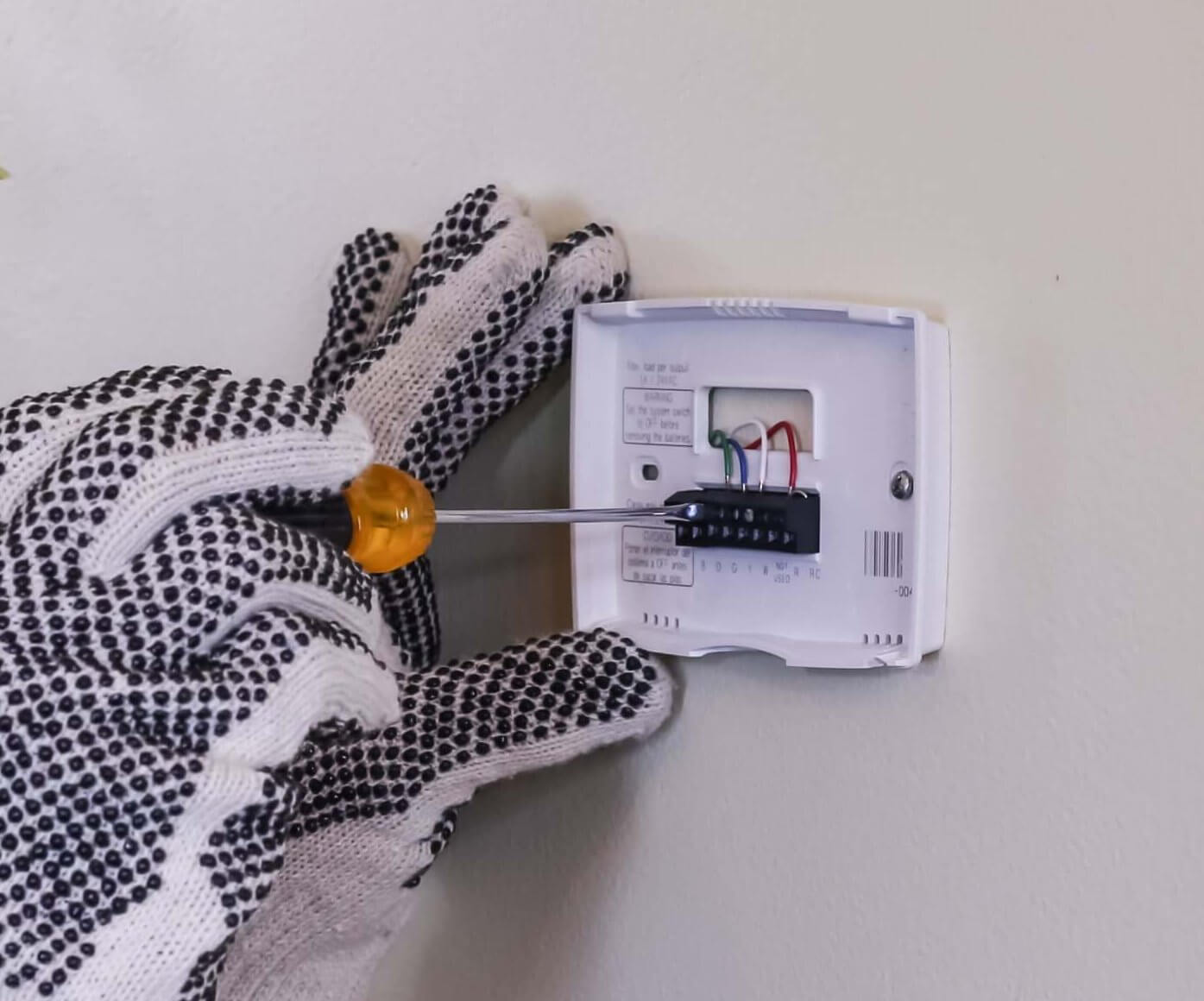
  • Wiring Problems: Loose or corroded wires can disrupt the connection between the thermostat and the HVAC system.
  • Age and Wear: Over time, thermostats can wear out and may require replacement or repair.
  • Incorrect Calibration: If the thermostat is not calibrated correctly, it can lead to inaccurate temperature readings and inefficient HVAC operation.

DIY Thermostat Troubleshooting

Before calling a professional, there are a few troubleshooting steps you can take:

  1. Check the batteries and replace them if necessary.
  2. Clean the thermostat, removing any dust or debris.
  3. Ensure all wires are securely connected and in good condition.
  4. Verify that the thermostat is set to the correct mode (heating or cooling) and the desired temperature.

Professional Thermostat Repair

While DIY troubleshooting can resolve some issues, certain problems may require the expertise of a professional. A skilled technician can diagnose and repair more complex issues, such as faulty wiring, component failures, or compatibility problems with your HVAC system. At North Shore Home Energy, our technicians can resolve any thermostat issue, no matter what type of thermostat you have. If your thermostat is not turning on, won’t cool or heat, or 

Benefits of Professional Repair

Opting for professional thermostat repair offers several advantages:

  • Expertise: Professionals have the knowledge and tools to accurately diagnose and fix thermostat issues.
  • Efficiency: A professional can quickly resolve problems, reducing downtime and inconvenience.
  • Warranty Protection: DIY repairs can sometimes void warranties; professional repair ensures your warranty remains intact.
  • Peace of Mind: Knowing your thermostat is correctly repaired or installed provides reassurance and comfort.

Ensuring Your Home’s Comfort

Thermostats are vital for maintaining home comfort, and understanding common reasons for thermostat repair can help you keep your system running smoothly. Whether you tackle basic troubleshooting yourself or seek professional assistance, addressing thermostat issues promptly ensures your home remains a comfortable sanctuary.

Remember, when it comes to thermostat repair, professional service can save you time, ensure the longevity of your device, and maintain the efficiency of your HVAC system, keeping your home comfortable for years to come. Contact us at North Shore Home Energy today for expert thermostat repair!

Check out our Google Reviews!

By brenna@admachines.com

How to Make an AC Work Better

How to Make an AC Work Better

  • Cooling
How to make AC work better with North Shore Home Energy.

A well-functioning air conditioning system is crucial for maintaining a comfortable home environment, especially during the scorching summer months. However, if your AC unit is not working optimally, it can lead to discomfort and higher energy bills.  North Shore Home Energy can answer the common question: how to make an AC work better? In this blog post, we will discuss the importance of a well-functioning AC, common issues affecting its performance, and most importantly, how you can make your AC work better. Whether you’re experiencing AC not working, your home AC stopped working, your AC unit not blowing cold air, or simply want to enhance its efficiency, these tips will help you optimize your cooling experience

Importance of a Well-Functioning AC 

A properly functioning AC system provides several benefits, such as maintaining a comfortable indoor temperature, improving indoor air quality, reducing humidity, and preventing heat-related health issues. It also helps protect your furniture, electronics, and other belongings from excessive heat and humidity damage.

Common Issues That Can Affect AC Performance

Before diving into optimization techniques, it’s important to understand common issues that can impact your AC’s performance. These issues may include clogged filters, refrigerant leaks, malfunctioning thermostats, dirty coils, and inadequate insulation. Identifying these problems early on can help you rectify them and ensure optimal AC performance.

How to Make an AC Work Better

Before you seek out professional help with your AC, there are a few steps that you can take on your own that may improve functionality. Try out this list for yourself and see if your AC starts to function more efficiently:

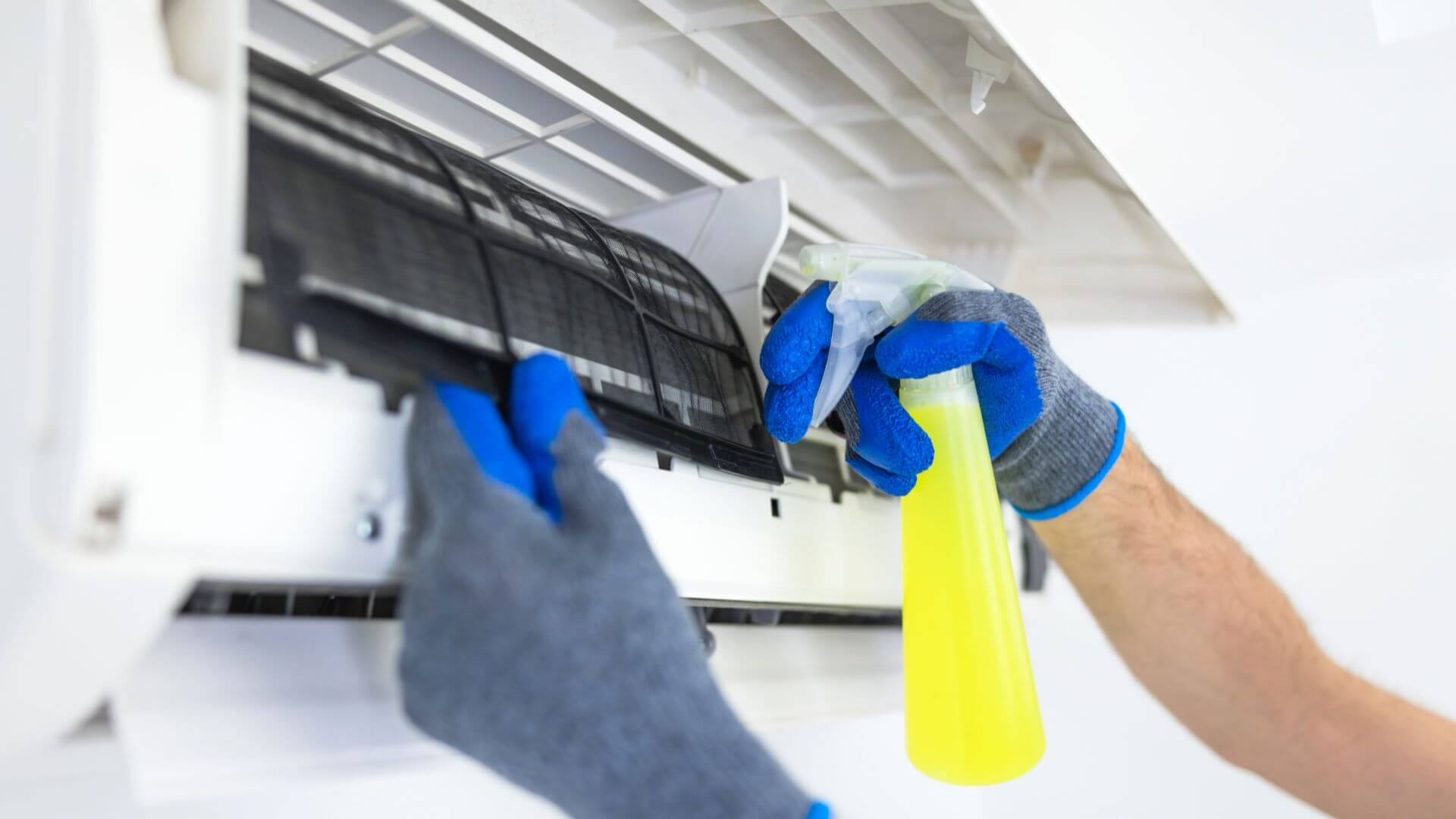
  • Keep the Unit Clean: Regular cleaning of your AC unit is essential for its efficient operation. Clean or replace air filters every one to three months, depending on usage. Remove debris, leaves, and other obstructions from the outdoor unit. Keep the indoor unit and vents free from dust and dirt.
  • Optimize Thermostat Settings: Adjusting your thermostat settings wisely can significantly enhance your AC’s efficiency. Set the temperature to a comfortable level, preferably around 78 degrees Fahrenheit. Consider using programmable thermostats to create temperature schedules that align with your daily routine, ensuring energy savings when you’re away.
  • Enhance Insulation and Seal Leaks: Proper insulation and sealing air leaks in your home can prevent cool air from escaping and warm air from entering. Insulate your walls, attic, and windows. Seal gaps around windows, doors, and ductwork to minimize energy loss and maximize AC efficiency.
  • Maintain Proper Ventilation: Ensure that vents and registers are not obstructed by furniture or other objects, as it can hinder airflow. Additionally, keep doors open between rooms to allow unrestricted air circulation throughout your home.
  • Utilize Shade and Window Coverage: Direct sunlight can increase the workload on your AC. Use curtains, blinds, or window films to block out sunlight and reduce heat gain. Strategically placed shade trees or awnings can also provide natural shade and minimize heat absorption.
  • Reduce Heat Generation: Certain appliances, such as ovens, dryers, and incandescent light bulbs, produce heat, adding to the workload of your AC. Minimize their usage during the hottest parts of the day or consider upgrading to more energy-efficient alternatives.
  • Schedule Regular AC Maintenance: Regular AC maintenance is vital to ensure optimal performance and prevent breakdowns. A professional technician can perform essential tasks, including inspecting, cleaning, and lubricating various AC components, checking refrigerant levels, and identifying potential issues before they become major problems.

Who Should I Schedule Regular AC Maintenance With?

When it comes to reliable AC maintenance, it’s crucial to rely on trusted professionals. North Shore Home Energy is a reputable organization that provides certified technicians who specialize in AC maintenance and repairs. By scheduling maintenance with North Shore professionals, you can be assured of high-quality service and expertise. Contact us today to schedule an appointment with one of our skilled technicians!

Achieve Optimal Performance

Optimizing your AC’s performance not only ensures a comfortable home but also helps you save on energy bills. By following the maintenance checklist, optimizing thermostat settings, enhancing insulation, and maintaining proper ventilation, you can make your AC work better and enjoy efficient cooling throughout the year. Remember, regular AC maintenance is essential to keep your unit in top shape. Take proactive steps to keep your AC well-maintained, and you’ll reap the benefits of a well-functioning cooling system for years to come.

Make sure you check out the Google Reviews that our happy customers left us!

By brenna@admachines.com

Understanding the Benefits of Simultaneous AC and Furnace Installation

Understanding the Benefits of Simultaneous AC and Furnace Installation

  • Cooling
what-are-the-benefits-of-simultaneous-AC-and-furnace-installation-north-shore-home-energy

When it comes to upgrading your HVAC system, simultaneous AC and furnace installation can provide you with a range of benefits. In this article, we’ll explore the advantages of this approach and guide you through the process. By understanding the benefits and taking the necessary steps with North Shore Home Energy, you can enjoy year-round comfort while optimizing energy efficiency.

Understanding Simultaneous AC and Furnace Installation

Simultaneous AC and furnace installation involve the process of installing both systems together, instead of separate installations. By integrating the two systems, homeowners can avoid winter downtime and enjoy a seamless transition from one season to another. This innovative approach takes advantage of advancements in HVAC technology to provide optimal performance and energy efficiency.

Benefits of Simultaneous AC and Furnace Installation

When it comes to upgrading or installing new HVAC systems, opting for simultaneous AC and furnace installation brings a multitude of benefits, including:

  1. Cost and Time Savings: Simultaneous installation reduces labor costs associated with separate installations. By completing both installations at once, you minimize disruptions and eliminate the need for additional visits.
  2. Enhanced Efficiency: Integrated systems work cohesively, optimizing energy usage and improving overall efficiency. Simultaneous installation ensures that your air conditioning and furnace systems are designed to complement each other.
  3. Seamless Seasonal Transition: Simultaneous installation means you won’t experience any downtime during the winter season. You can smoothly switch from heating to cooling without delays or discomfort.
  4. Proper System Sizing: Simultaneous installation allows contractors to accurately assess your home’s heating and cooling needs together. This ensures that both systems are properly sized and tailored to your specific requirements.
  5. Integrated Control and Convenience: With simultaneous installation, you can enjoy the convenience of a unified control system. You’ll have one central thermostat to manage both your AC and furnace, providing greater ease of use and control over your home’s climate.

What to Expect During Simultaneous Installation

During the simultaneous installation process, expect the following:

  1. Site Preparation: A North Shore Home Energy contractor will assess your space, ensure proper ventilation, and make any necessary adjustments to accommodate the installation.
  2. Equipment Installation: The AC and furnace systems will be installed together, with careful attention to electrical connections, ductwork, and venting requirements.
  3. System Testing and Calibration: A North Shore Home Energy contractor will thoroughly test the integrated systems, ensuring optimal functionality and performance. They will calibrate the controls and make any necessary adjustments.

Discover the Benefits of Simultaneous AC and Furnace Installation

Simultaneous AC and furnace installation offers numerous advantages, including cost and time savings, enhanced efficiency, seamless seasonal transitions, proper system sizing, and integrated control. By preparing adequately, you can experience the benefits of a harmonious HVAC system that ensures year-round comfort in your home.

Are you ready to upgrade your HVAC system? Contact North Shore Home Energy today to explore the benefits of simultaneous AC and furnace installation.

Check out our Google Reviews!

By nshec

What is an AC Tune-up and Do You Really Need It?

What is an AC Tune-up and Do You Really Need It?

  • Cooling
What is an AC Tune-up and Do You Really Need It, North Shore Home Energy

If you’re a homeowner with an air conditioner, you’ve probably heard about AC tune-ups. But what exactly is an AC tune-up, and do you really need it? In this article, we’ll answer those questions and more. We’ll cover the benefits of a tune-up, what’s included in the service, how often you should get one, and how long it takes. We’ll also explain why North Shore Home Energy is the best choice for your AC maintenance needs.

What is an AC Tune-up

An AC tune-up is a professional maintenance service performed on your air conditioner. During the service, a technician will thoroughly inspect, clean, and adjust your AC unit to ensure it’s operating at peak performance. A tune-up typically includes cleaning or replacing air filters, checking refrigerant levels, inspecting electrical connections, lubricating moving parts, and more.

Services Typically Included in a Tune-up

An AC tune-up typically includes the following services:

  • Cleaning or replacing air filters
  • Checking refrigerant levels and adjusting if necessary
  • Inspecting electrical connections and wiring
  • Lubricating moving parts
  • Checking and tightening belts and pulleys
  • Checking and cleaning the condenser and evaporator coils
  • Inspecting the blower motor and fan blades
  • Testing the thermostat and adjusting if necessary
  • Cleaning the condensate drain and pan
  • Inspecting the overall system for any issues or potential problems

Is a Tune-up Necessary

Yes, an AC tune-up is necessary if you want to keep your air conditioner running efficiently and prevent costly breakdowns. Just like any other mechanical system, your air conditioner needs regular maintenance to stay in good working condition. Without proper maintenance, your AC unit can become less efficient, break down more often, and ultimately have a shorter lifespan.

Benefits of an AC Tune-up

There are several benefits to getting a tune-up, including:

  • Improved energy efficiency and lower utility bills
  • Increased comfort and better air quality
  • Reduced risk of breakdowns and costly repairs
  • Longer lifespan for your air conditioner
  • Peace of mind knowing your AC unit is operating safely and reliably

How Often to Get an AC Tune-up

It’s recommended to get an AC tune-up once a year, ideally before the start of the cooling season. This will ensure that your air conditioner is ready to go when you need it most. However, if you have an older unit or a unit that sees heavy use, you may want to consider getting a tune-up twice a year.

How Long a Tune-up Usually Takes

The length of a tune-up can vary depending on the size and complexity of your system. Typically, a tune-up will take anywhere from 1 to 3 hours to complete.

Schedule an AC Tune-up With North Shore Home Energy

If you’re in need of an AC tune-up, look no further than North Shore Home Energy. Our team of experienced technicians will provide you with a thorough and efficient tune-up to keep your air conditioner running smoothly. We also offer a range of other HVAC services, including repairs and installations. Contact us today to schedule your tune-up or learn more about our services. Check out our Google Reviews!

By sam@admachines.com

A Guide to Central Repair Costs in Massachussetts

A Guide to Central Repair Costs in Massachussetts

  • Cooling
how much does ac repair cost north shore home energy

If you’re a homeowner in Massachusetts considering installing central air conditioning, you’re likely wondering how much it will cost. But what about the cost of AC repair? Understanding the average costs associated with AC repair is essential for budgeting and avoiding unexpected expenses. In this guide, we’ll break down the cost of AC repair in Massachusetts, along with tips for saving money and whether insurance will cover the cost.

How Much Does AC Repair Cost in Massachusetts?

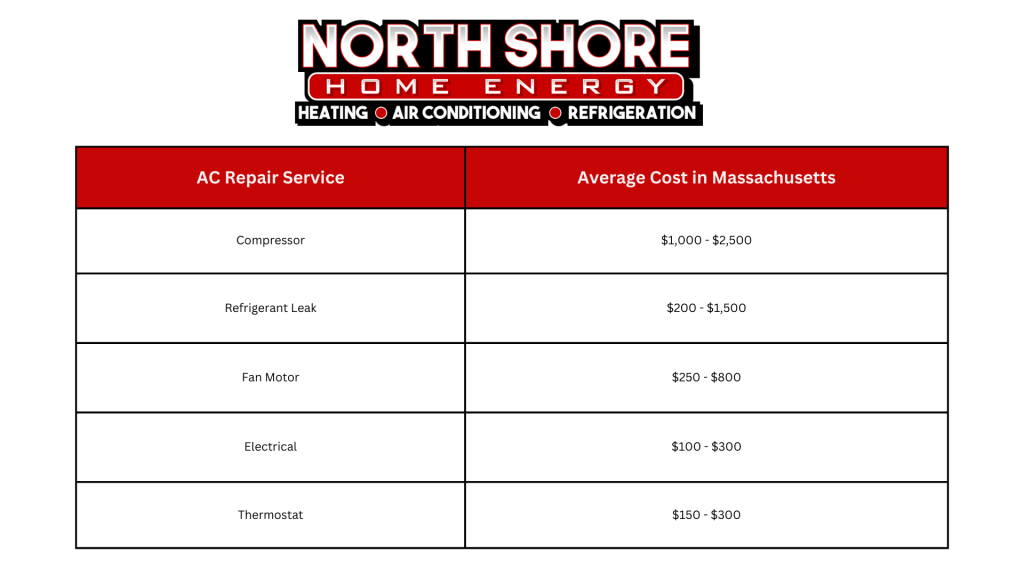
The cost of AC repair in Massachusetts can vary based on several factors, including the type of AC unit, the extent of the damage, and the location of the repair service. Here’s a breakdown of the average costs you can expect to pay for common AC repair services in Massachusetts:

AC Repair pricing chart, AC Repair Service, Average Cost in Massachusetts, North Shore Home Energy
AC Repair Cost Chart

When Should You Get AC Repair?

It’s essential to know when to get AC repair to avoid bigger problems and costly repairs in the future. Here are some signs that your AC unit needs repairs:

  • The AC is not cooling your home efficiently.
  • There are strange noises or smells coming from the unit.
  • The unit is leaking water or refrigerant.
  • Your energy bills are higher than usual.

If you notice any of these signs, it’s best to contact a professional AC repair service in Massachusetts as soon as possible.

Factors That Affect AC Repair Cost

Several factors can affect the cost of AC repair in Massachusetts. Some of these factors include:

  • The type and age of your AC unit
  • The extent of the damage
  • The location of the repair service
  • The season or time of year

Types of AC Repair

There are various types of AC repair services in Massachusetts. Some of the most common types of AC repair services include:

  • Compressor repair or replacement
  • Refrigerant leak detection and repair
  • Fan motor repair or replacement
  • Electrical repair and troubleshooting
  • Thermostat repair or replacement

How to Save Money on AC Repair Services

Here are some tips to help you save money on AC repair services in Massachusetts:

  • Schedule regular maintenance services to avoid costly repairs.
  • Research and compare different services in your area.
  • Consider DIY repairs for minor problems, such as changing air filters.
  • Upgrade to a more energy-efficient AC unit to save on energy bills and repair costs in the long run.

Does Insurance Cover the Cost?

Whether insurance will cover it depends on your policy and the specific circumstances surrounding the repair. In general, homeowners insurance may cover the cost if the damage is caused by a covered peril, such as a storm or fire. However, it’s best to review your insurance policy and speak with your insurance provider to determine what is covered.

Closing Thoughts

Understanding the average cost of AC repair in Massachusetts is crucial for budgeting and avoiding unexpected expenses. By knowing when to get a repair, the factors that affect the cost, and how to save money, you can be better prepared for any needs. Remember to review your insurance policy to determine whether the cost is covered.

Check out our Google Reviews!

By sam@admachines.com

How Much Does Mini Split Installation Cost: Complete Guide

How Much Does Mini Split Installation Cost: Complete Guide

  • Cooling
  • Heating
  • Indoor Air Quality
How Much Does Mini Split Installation Cost Complete Guide - North Shore Home Energy

Mini split systems are a popular heating and cooling option for homeowners due to their efficiency and ease of use. If you’re considering installing a mini split system in your home, one of the most important factors to consider is the installation cost. In this blog post, we’ll provide a complete guide on costs and what factors affect the cost.

How Much Does Mini Split Installation Cost?

The cost of mini split installation varies depending on several factors such as the size of the unit, the complexity of the installation, and the location. On average, mini split installation costs between $3,000 and $8,000, including both materials and labor. However, the price can be higher or lower depending on the factors that we’ll discuss in the following sections.

Installation Cost Chart

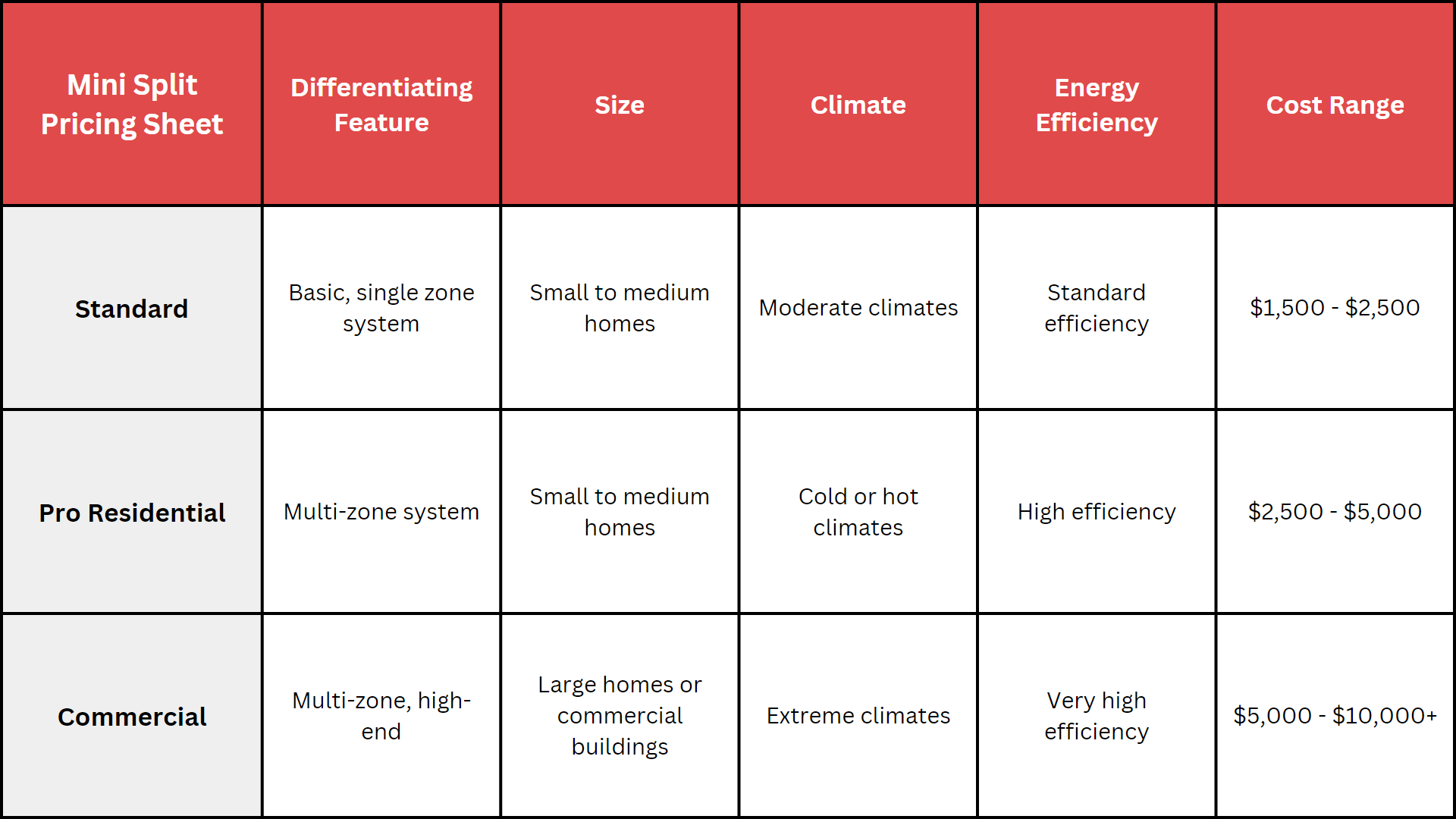
The installation cost of a mini split system can vary based on several factors. The following chart shows the average cost range based on different factors:

Mini Split Pricing Table, Differentiating Feature, size, climate, energy efficiently, cost range - Standard, pro residential, commercial
Mini Split Pricing Table

Other Factors That Affect the Cost

Several other factors affect the cost, including the size of the unit, the number of indoor units, the type of installation, and the location. Additionally, the complexity of the installation, the accessibility of the installation site, and the labor costs can also affect the overall cost.

Additional Costs to Consider When Installing a Mini Split System

When installing a mini split system, there are additional costs to consider, such as the cost of electrical work, the cost of a new thermostat, and the cost of maintenance. These costs can vary based on the complexity of the installation and the size of the unit.

Factors Affecting the Cost of Mini Split Installation

By understanding the factors that affect the cost, you can budget and plan for the installation of a mini-split system more effectively. Don’t forget to consider the additional costs when installing a mini split system to ensure that you’re fully prepared for the overall cost. Contact North Shore Home Energy for more information on installing your new mini split system.

Check out our Google Reviews!

By nshec

5 Tips to Minimize Strain on you HVAC System

5 Tips to Minimize Strain on you HVAC System

  • Cooling
air conditioner repair newburyport

It’s been one hot summer this year. Temperatures have been hitting record highs almost every day. Our neighbors to the south in Boston saw their hottest day in recorded history just the other week. It’s safe to say that your AC is probably getting a workout this summer. That said, it’s important to remember to take it easy on your HVAC system. Overworked and overused ACs can break down and even in some rare instances cause electrical fires. Thankfully, there are some easy and convenient ways to take the strain off your AC system during this unprecedented heat wave.

Run Your Fan 24/7

This is a no-brainer. Short of an HVAC system, a good fan is one of the best ways to keep cool during a heat spell. By turning off the AC for a few hours here and there and supplementing the your cooling efforts with even a simple, cheap box fan from Walmart can keep you cool for a short period of time. While the temperature obviously won’t match the efficacy of the HVAC system, it’ll get the job done while you give AC unit a break for a little bit.

Don’t Turn off The AC When You Go To Work

This may sound counter productive, but hear us out. When you turn off your AC when you go to work, your house warms up dramatically during the day. That means that when you come home, your system has to work that much harder to get it back to a comfortable level. Think of it as a runner falling behind in a footrace: he has to run twice as hard to catch back up. By leaving your system running for eight hours while you’re out, there’s less catch up to do while you’re home. You can compensate this extra use of the AC by keeping it at a lower power or at a higher temperature. Keeping your blinds, curtains and windows closed during the day will help prevent the heat from entering your home and keep it comfortably cool.

Change Your Filters Regularly

Your air conditioner’s filters take harmful particles and bacteria out of the air you breathe. Over time, these filters get dirty and need to be replaced on a regular basis. Without regular changing, the filters decrease the AC’s efficiency and makes it work harder. This leads to more strain and more breakdowns, which is the last thing you need to deal with when the weather is 100+ degrees out there.

Wash the Outdoor Unit

If you have an outdoor unit, it’s going to get dirty. It’s just the nature of it being outside. Dirt, insects, leaves, water, and other forms of debris are all liable to accumulate on the unit over time and it doesn’t take a seasoned HVAC tech to be able to guess that stuff like that has an overall negative impact on your system. Giving it a good wash down every once in a while helps it work at 100%.

Contact North Shore Home Energy Today for the Best in HVAC Work!

Read The Great Things That Your Neighbors Are Saying About NSHEC.

By nshec

Things to Expect When You Get an AC Replacement

Things to Expect When You Get an AC Replacement

  • Cooling
ac replacement

So you’ve decided on an AC replacement. That’s great! A new AC system is a great investment in your family’s comfort and your home’s overall value over time. As with any home improvement project, however, there are a few things you should be expecting as you go through the AC replacement process. In the interest of keeping yourself as informed as possible regarding the status of your system, we’re here to walk you through some things you should be expecting in the coming days.

Area Preparation

Once the technician gives you their initial estimates, the best thing you can do to help the process along is to clear the area where the system will be installed. Clear it of any and all debris or trash. It it’s an outdoor unit make sure the grass around it is properly cut, and if you’re installing an indoor unit like a mini split, make sure the installation area is clear of household furniture or clutter. If there are inordinately heavy objects in the way life sofas, refrigerators, or the like, consider covering them in such a way to protect them from any dust that may result from the installation process.

Know the AC Replacement Lingo

When you’re going through the process of getting a new system, you’ll need to know two terms in particular:

  • Heating Season Performance Factor or HSPF refers to how effective a heat pump is during the heating season. A critical rating to keep in mind if you’re getting a heat pump installed, the industry standard for new products is a minimum rating of 7.7.
  • Seasonal Energy Efficiency Ratio or SEER notes the efficacy of the cooling system. the bare minimum for all new systems is 13.

It’s worthwhile to note that the higher a system is rated for HSPF and SEER, the pricier it will be. However, you do get what you pay for, as these units typically have a much better performance and are longer lived than their cheaper counterparts.

Testing Your New Unit

Once the installation technician has come to your home and completed the installation process, they’ll have to test the new system to make sure it’s up to the task of cooling your home. Numerous tests are conducted to ensure that the pressure and vacuum systems are working before loading the unit with the refrigerant that makes it run. After it’s been filled, another test is carried out to ensure everything is still in working order.

Contact North Shore Home Energy Today for the Best air conditioner replacement in Newburyport and the surrounding area!

Read The Great Things That Your Neighbors Are Saying About NSHEC.

ac failure

By nshec

Air Conditioner Repair in Newburyport

Air Conditioner Repair in Newburyport

  • Cooling
air conditioner repair newburyport

Do you need air conditioner repair in your Newburyport home or business? You’ve come to the right place. North Shore home energy is equipped to handle any ac repair project you have for us. Take one of our most recent customers in Newburyport. This digital marketing company had recently suffered a system failure and had gone several days without any air conditioning whatsoever. With the recent humidity in the area, this was something of a major issue, so we dispatched Donny, one of our expert-level technicians out to resolve their issue quickly.

The Issue

Once we were on the scene, it was a pretty quick, diagnosis: the unit’s compressor had died. These components typically buckle under years of wear and tear, but this one appeared to have some sort of defect from the factory that negatively impacted its performance. After the initial assessment, we came back the following day with a brand new compressor for the outdoor unit, which was itself a little larger than an average unit, due to the fact it was cooling a much larger, commercial office space.

The Job

Once we got back to the site with the appropriate replacement hardware, we got to work replacing the faulty compressor. Donny started by unscrewing the unit, loosening it so that he could easily take off the top and get inside. But before anything else happened, we needed to drain the entire system of all it’s refrigerant as a safety precaution. When it had all been extracted, there was about 33 pounds of refrigerant; for perspective, your home probably only has between five and ten pounds, just to further display the differences between commercial and residential HVAC projects. Once the drain was complete, Donny was able to get into the the unit itself and install the new compressor  hardware. Quarters were tight between the various other units and the surrounding walls, but getting in and around the unit was no problem whatsoever.

Before we could resupply the system with fresh refrigerant, a cleanse was in order. The outdoor unit was a considerable distance away from the office itself; about 100 feet of tubing and pipes connect them. Even after the refrigerant drain, there was still a significant buildup of moisture in those pipes. Mostly consisting of water, oil, and leftover droplets on refrigerant. Using a vacuum-style device hooked up to the lines, we began the process of removing these elements from the system, leaving it bone dry and free of any debris. Afterward, all that was left was to resupply the system with new refrigerant. Once the refrigerant was replaced, all that was left was to put the unit back together again and seal it up.  When it was all said and done, the job took about two hours and most of that time was spent emptying and refilling a large amount of refrigerant.

When you need air conditioner repair in Newburyport, North Shore is the only company to call. We get it done fast and we get it done right. Whether it’s commercial or residential, whether it’s a blown compressor or a bent fan, we can handle air conditioning repairs of all shapes and sizes.

Contact North Shore Home Energy Today for the Best in HVAC Work!

Read The Great Things That Your Neighbors Are Saying About NSHEC. air conditioner repair newburyport air condtioner repair newburyport air conditioner repairtioner repair

By nshec

Welcome To Cooling Season: What You Need to do to Prep Your AC for a Busy August

Welcome To Cooling Season: What You Need to do to Prep Your AC for a Busy August

  • Cooling
air conditioner repair

The days are longer, people around the office are taking vacations, and the temperature is constantly hitting the nineties. There’s no question about it: the dog days of summer are at our doorstep. And with the hottest weeks of the year ahead of us, it’s important to make sure your AC is up to the challenge. In order to make absolutely sure you’re set up for success this August, there are a few easy, DIY maintenance tasks you can carry out on your own at home.  If you need air conditioner repair, this is the way to find out. 

Safety is Key

Before you do anything for your system, you want to make sure that you keep yourself safe while you work. If you have an outdoor unit, you need to deactivate the power before doing ANYTHING. A fully-powered AC unit can be incredibly hazardous with spinning fans, live electricity and the like. Before doing anything related to prepping your AC, be sure to disconnect the power before doing anything. You can’t enjoy your summer from a hospital room.

Out With The Old, In With The New 

You don’t need to be an HVAC tech to understand that a dirty air filter means you’re going to have dirty air. After a long winter hibernation (and probably a summer of heavy use from last year), your air filters are going to be worn down, dirty, and minimally effective. Air filters are cheap, easy to find, and relatively easy to replace if you have a general idea of what you’re doing. Air filters are one of the first things to go after the winter and as such are one of the first things you should be replacing when the summer rolls around. 

 Consider Completely Cleaning Condenser Coils

Over the winter months, your condenser unit will accrue some debris: dirt, leaves, water, etc. Again, you don’t need to be an expert to know that such debris is not conducive to your AC’s performance. The condenser coil is one of the most important parts of your unit, which itself is the large metal box outside your house that has spinning fans. If the condenser was covered during the winter, there probably won’t be a massive amount of debris on it in the summer. If you didn’t cover it, consider doing so this fall. 

Make sure the fan is clear of any and all refuse. Next you need to open the box and check the coils. If there is anything on these coils, there’s a very particular set of things you need to do to make sure the system runs at peak efficiency

  • Remove the side and top panels or protective grilles from the condenser unit. Note: Double check to make certain the power to the condenser unit is turned off.
  • Lift off the top. The fan may be attached to it making it heavy. Note: Don’t tug any of the wires connected to the fan.
  • Using a refrigerator coil brush or a soft brush on a vacuum, gently clean the coils from the outside of the unit. After you clean the outside, vacuum coils from the inside. Note: Be careful not to bend the delicate fins or damage the coils

Check the Coolant Lines

The coolant lines essentially are what carries the cool air to your home from the condenser unit. If these lines are damaged in any way there’s no guarantee regarding the efficiency. These lines are usually covered with some kind of insulation to prevent the cool air from escaping the tubes before it gets into your home. You’re going to want to check this insulation thoroughly to see if any portion of it is compromised: any fraying or wearing needs to be addressed now because it’ll only get worse over time. 

Testing 1 2 3…

The final step of any start of season AC tune-up is to test out your system. Because at the end of the day, there are still plenty of things that could go wrong with your AC that you wouldn’t really have a way of knowing the damage of. A quick test run of your system for about an hour will be able to determine any nascent with you wouldn’t be able to determine at baseline.

Know When to Call in Backup

We love to see homeowners embrace the DIY spirit. IT shows initiative and genuine investment in their home’s HVAC system. That said, there are some things best left to professionals. If you notice any glaring issues during your DIY inspection, rather than trying to fix them yourself, its safest to call a licensed technician from North Shore Home Energy. Our team members have the skills, tools, and expertise to avoid damaging your air conditioner. Improper repairs can result in damage to your system or yourself, so when you need air conditioner repair, it’s best to call in the cavalry.

Contact North Shore Home Energy Today for the Best air conditioner repair in Amesbury and the surrounding area!

Read The Great Things That Your Neighbors Are Saying About NSHEC.

ac failure

By nshec